Blog
A Comprehensive Overview of Electric, Pneumatic, and Hydraulic Linear Actuators.
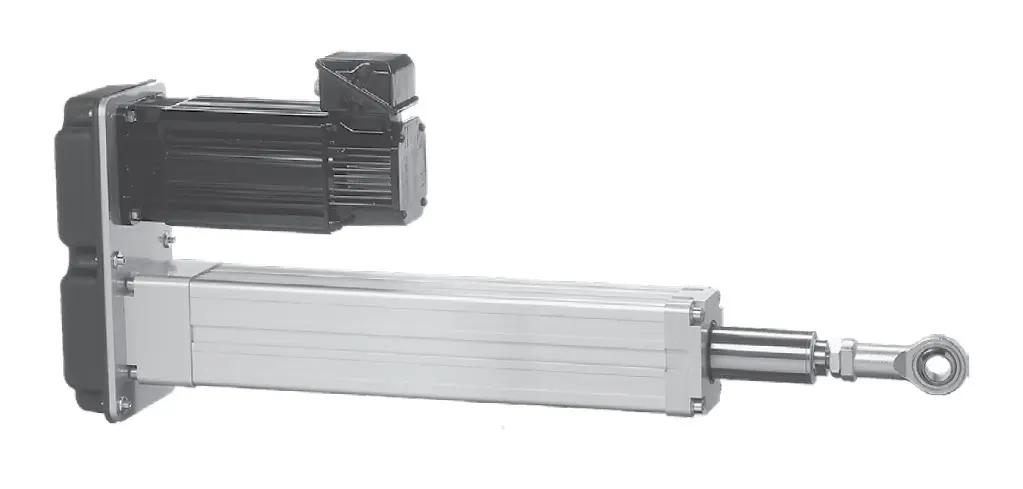
1. Introduction To Linear Actuators
Linear actuators are an essential component in mechanical engineering. These devices are utilized in a variety of industries, including manufacturing, robotics, automation, aerospace, and healthcare, to transform rotary motion into linear motion.
In this article, we will discuss different types of linear actuators , their uses, the benefits of using them, their drawbacks, and when to employ them for a specific application. This article will also help you to understand the differences between electric linear actuators, pneumatic linear actuators, and hydraulic linear actuators, allowing you to make informed decisions when selecting the right type of linear actuator for your project, whether you are an engineer, researcher, or hobbyist.
1.1 Definition
Devices that transform rotary motion into linear motion and are commonly utilized in industrial automation and control systems are referred to as linear actuators. Linear actuators are used to move loads in a straight line, allowing for precise and accurate motion control.
1.2 Types of Linear Actuators
Linear actuators can be classified into three types: electric, pneumatic, and hydraulic, each with unique characteristics that make them suitable for specific applications.
Electric linear actuators are motor-driven devices that enable precise and accurate motion control. Pneumatic linear actuators, on the other hand, use compressed air to generate motion, making them ideal for heavy-duty applications. Finally, hydraulic linear actuators produce motion by utilizing hydraulic fluid, which has tremendous power and force.
1.3 Importance of Linear Actuators in a System
As previously stated, linear actuators are critical components in mechanical systems because they allow rotary motion to be converted into linear motion. This functionality is what makes them so important in many modern industrial applications. Furthermore, linear actuators offer precise and accurate motion control, making them essential in applications requiring high levels of accuracy, speed, and repeatability. Many mechanical systems would be impossible to function without linear actuators, and automation and control would be highly restricted.
Let's start by delving into the intricate details of the three primary types of linear actuators one by one.
2. Electric Linear Actuators
Electrical linear actuators are devices that generate linear motion using electrical power. They have been engineered to provide highly precise and reliable motion control, making them appropriate for a wide range of industrial and commercial applications. This section provides an overview of electrical linear actuators, including how they work, their benefits, their applications, and a comparison to other types of actuators.
2.1 Definition and working
Electrical linear actuators function by converting electrical energy into linear motion. They typically comprise an electric motor, a lead screw or a ball screw, and a nut. The electric motor rotates the screw, which linearly moves the nut, producing the desired motion. Electrical linear actuators are available in a wide range of sizes, designs, and specifications, allowing them to be employed in a variety of applications.
2.2 Advantages of Electric Linear Actuators
Some of the key benefits of electric linear actuators that make them widely utilized in a variety of industrial and commercial applications are as follows:
- Precise motion control: Electric linear actuators provide accurate motion control, making them perfect for applications requiring a high level of precision. They offer effortless, linear movement and may be finely adjusted in terms of speed and position.
- High repeatability and consistency: Electric linear actuators provide high repeatability and consistency in motion control, guaranteeing that the identical motion is done exactly and accurately each time. This is especially crucial in applications such as medical equipment, laboratory instruments, and quality control systems that demand unaltered and reliable performance.
- Low Maintenance: Electric linear actuators serve the purpose with low maintenance, in comparison to other types of actuators. They do not require any fluid or air to function, reducing the possibility of leaks and system malfunctions. Electric motors also have a longer lifespan and require fewer repairs than hydraulic or pneumatic motors.
- Silent and seamless operation: Electric linear actuators operate silently and effectively, making them ideal for low-noise applications. They are intended to reduce vibrations and noise levels, which are particularly significant in industries such as healthcare and food processing.
- Energy efficient: Electric linear actuators are energy efficient since they only require electricity while in use. They function without the use of any fluid or air, which minimizes energy consumption and operational costs. As a result, they are a popular choice in industries that value sustainability and energy efficiency.
- Compact Design: Electric linear actuators feature a compact design that allows them to be easily integrated into existing systems and machines. They are available in a variety of sizes, designs, and specifications, allowing them to fit into confined spaces and be utilized in a variety of applications.
2.3 Applications of Electric Linear Actuators
Electric linear actuators are highly adaptable and are used in a wide range of industrial and commercial applications. Here are some of the most common industries in which they are employed:
- Robotics & Automation: Electric linear actuators play an important role in robotics and automation as they offer precise motion control. They are used in robotics to provide seamless and consistent movement of robotic arms and grippers. They are also utilized to regulate the movement of conveyor belts, manufacturing lines, and packaging machines in automation systems.
- Material handling: Electric linear actuators are frequently used to lift, push, and move heavy loads in material handling and assembly systems. They are used in industrial cranes, lifting and positioning systems to move goods and materials throughout a production facility in a dependable and efficient manner.
- Medical Equipment: Electric linear actuators are found in medical equipment and gadgets such as hospital beds, dentist chairs, and imaging systems. They provide effortless and precise motion control, ensuring appropriate and comfortable patient and clinical device positioning.
- Aerospace and aviation: Electric linear actuators are used in applications such as wing flaps, landing gear, and cockpit controls in the aerospace and aviation industry. They enable precise and dependable motion control in aviation's stern environmental circumstances, such as high altitude, low temperatures, and intense vibrations.
- Agriculture & Farming: Electric linear actuators are utilized in agriculture and farming applications such as irrigation systems, greenhouse ventilation, and feeding systems. They enable efficient and reliable control over various farm machinery movements, increasing production and lowering labor expenses.
- Furniture and home automation: Electric linear actuators are found in furniture and home automation systems such as adjustable beds, standing desks, and smart home systems. They enhance comfort and convenience by providing seamless and precise control over the movement of furniture or home appliances.
3. Pneumatic Linear Actuators:
Pneumatic linear actuators are mechanical gadgets that transform compressed air pressure into linear motion. They are frequently used in industrial automation and other applications demanding reliable linear motion. Here's more information on how they work, their advantages, and the most prevalent uses in various industries.
3.1 Definition and working
Pneumatic linear actuators generate linear motion by transforming compressed air pressure. They are made up of three parts: a piston, a cylinder, and a control valve. Through the control valve, compressed air is injected into the cylinder, forcing the piston to travel linearly. The valve controls the direction of the airflow, which determines the direction of the motion. When the piston has completed its stroke, the valve is reversed, causing air to flow in the other direction and reversing the piston's action.
3.2 Advantages of Pneumatic Linear Actuators
Pneumatic linear actuators have a number of advantages and benefits, some of which are as follows:
- High power-to-weight ratio: One of the primary benefits of pneumatic linear actuators is their high power-to-weight ratio, which means they can generate a substantial amount of force in relation to their weight. This makes them appropriate for situations requiring great force but where weight is a constraint.
- Fast operation and high speed: Pneumatic linear actuators are noted for their quick operation and high speed. They can offer rapid linear motion, making them an excellent alternative for applications requiring swift, precise movements.
- Simple design and easy maintenance: Pneumatic linear actuators have a simple design that consists of a cylinder, a piston, and a control valve. Because there are no complex mechanical components to deal with, they are simple to install and maintain. Routine maintenance usually consists of lubricating the cylinder and inspecting the control valve for leaks or damage.
- Cost-effective: Pneumatic linear actuators are quite affordable when compared to other forms of linear actuators. They also have reduced starting costs and require moderate maintenance costs, making them an affordable alternative for a wide range of applications.
- Suitable for use in risky circumstances: Pneumatic linear actuators are an excellent choice for use in potentially explosive or fire-prone environments. This is because they do not produce heat or sparks, making them suitable for use in settings containing combustible or explosive materials.
- Reliable and Durable: Pneumatic linear actuators are well-known for their dependability and durability. They are built to survive extreme environmental conditions and can run for extended periods of time without requiring maintenance. As a result, they are a dependable solution for applications requiring continuous, high-speed operation.
- Easy to control and adjust: Pneumatic linear actuators are simple to operate and adjust, allowing for precisely calibrated motion control. They are simple to interface with sensors and control systems, allowing them to automate the process and assure consistent performance.
3.3 Applications of Pneumatic Linear Actuators
Because of their benefits, pneumatic linear actuators are adaptable and find multiple applications in various industries. Some of the most prevalent uses of pneumatic linear actuators are as follows:
- Manufacturing and Assembly: Pneumatic linear actuators are frequently employed in manufacturing and Installation for assembly line automation, part transfer, and material handling. They provide consistent and precise motion control, which can assist expedite and optimize the manufacturing process.
- Transportation: Pneumatic linear actuators are used to operate doors, ramps, and other components in transportation systems. Pneumatic actuators are ideal for these applications because of their high speed and swift response times.
- Food and Beverage sector: Due to their capacity to work in difficult and corrosive settings, pneumatic linear actuators are suitable for application in the food and beverage sector. They are frequently employed in food processing, packaging, and handling.
- Medical Equipment: Pneumatic linear actuators are utilized in bed frames in hospitals, patient lifts, and automatic wheelchairs. They provide consistent and seamless movement, which is critical for patient safety and comfort.
- Mining and Construction: Pneumatic linear actuators are widely employed in mining and construction equipment such as rock drills, jackhammers, and excavators. They provide strong and precise motion control, which is critical in these heavy-duty applications.
- Robotics and Automation: Pneumatic linear actuators have become popular in robotic and automation applications due to their rapid reaction times, high power-to-weight ratio, and ease of control. Pick-and-place activities, material handling, and packaging are all popular uses for them.
4. Hydraulic Linear actuators
Hydraulic linear actuators are mechanical gadgets that transform hydraulic energy into linear motion. To generate linear motion, these actuators use pressurized hydraulic fluid to move a piston within a cylinder. Here's more information on how they work, their benefits, and their most common applications in various sectors.
4.1 Definition and working
Hydraulic linear actuators are gadgets that transform hydraulic fluid energy into linear motion. They are typically made up of a hydraulic cylinder and a piston that moves within the cylinder due to the force provided by the hydraulic fluid. The cylinder is usually made of metal and sealed at both ends, while the piston is attached to the cylinder through a rod that extends through one end. When hydraulic fluid is injected into the cylinder, it exerts pressure on the piston, forcing it to move linearly. This technique can be employed for activities like lifting heavy loads or pushing/pulling objects. Hydraulic linear actuators are widely utilized in industrial applications that require high force and precision control.
4.2 Advantages of Hydraulic Linear Actuators
Hydraulic linear actuators provide numerous advantages in terms of dependability, durability, and high-force capabilities. The following are some of their main advantages.
- High force and load capacity: Hydraulic linear actuators have a high force and load capacity, making them suitable for heavy-duty applications.
- Seamless and precise: Hydraulic systems can offer seamless and accurate motion control because of the incompressible characteristics of the fluid employed in them.
- Good energy efficiency: Hydraulic systems are particularly productive because they can transmit enormous quantities of power with minimum energy loss.
- Ability to operate in harsh conditions: Hydraulic systems are resistant to dust, grime, and other pollutants, making them excellent for use in challenging environmental conditions.
- Longer lifespan: Because hydraulic linear actuators have been engineered to endure enormous loads and high pressure, they are extremely durable and longer-lasting.
4.3 Applications of Hydraulic Linear Actuators:
- Heavy machinery: Hydraulic linear actuators are widely found in bulldozers, cranes, and excavators. They are utilized to regulate the movement of the equipment's numerous elements, such as the boom, arm, and bucket.
- Aerospace and aviation: Hydraulic linear actuators are utilized to regulate the motion of landing gear, flaps, and other essential parts in aerospace and aviation applications. Because of their excellent reliability and capacity to survive rigorous operational circumstances, they are advocated in these applications.
- Industrial automation: Industrial Automating processes use hydraulic linear actuators in applications such as conveyor systems, material handling equipment, and assembly lines. They offer the high-force and precise motion control that these kinds of applications demand.
- Marine and offshore: Hydraulic linear actuators are employed to control the movement of different components such as rudders, propellers, and cargo handling equipment in the marine and offshore applications. They are favored because of their capacity to function in difficult situations and use great force while doing so.
- Agriculture industry: Hydraulic linear actuators are utilized in agricultural machinery such as tractors, plows, and harvesters. They are employed to move different components such as the blade, arm, and implement. Because of their high force capabilities and durable structure, they are advocated in the agriculture industry.
- Construction Industry: Construction equipment such as cranes, excavators, and backhoes use hydraulic linear actuators. They govern the movement of several components such as the boom, arm, and bucket. They are preferred because they can give great force and accurate motion control.
5. Differences and Similarities between the Three Types of Actuators
The following are the main differences between electric, pneumatic, and hydraulic linear actuators:
- Power Source: The primary distinction between these sorts of actuators is the power source they employ. Electric actuators make use of electricity, whereas pneumatic actuators make use of compressed air and hydraulic actuators make use of hydraulic fluid.
- Speed: Pneumatic actuators typically outperform electric and hydraulic actuators in terms of speed. Hydraulic actuators are often the slowest of the three.
- Force: Hydraulic actuators have the greatest force capacity, followed by pneumatic and electric actuators.
- Precision: Electric actuators have the best precision and accuracy, followed by hydraulic and pneumatic actuators.
- Maintenance: Electric actuators require the least amount of maintenance, followed by pneumatic and hydraulic actuators.
The following are the key similarities between electric, pneumatic, and hydraulic linear actuators:
- Linear Motion: Linear motion is produced by all three types of actuators.
- Directional Control: All three types of actuators can control motion in both directions.
- Load handling: All three actuator types are capable of handling heavy loads.
- Control options: Positioning feedback and limitation switches are available on all three types of actuators.
- Durability: All three types of actuators are robust and are able to endure demanding situations.
The following table summarizes the key distinctions and similarities among electric, pneumatic, and hydraulic linear actuators:
| Feature | Electric Linear Actuators | Pneumatic Linear Actuators | Hydraulic Linear Actuators |
|---|---|---|---|
| Power Source | Electricity | Compressed Air | Pressurized Fluid (Oil or Water) |
| Speed | Moderate | Fast | Slow |
| Force | Moderate | High | High |
| Precision | High | Moderate | High |
| Control | Accurate | Less Accurate | Accurate |
| Maintenance | Low | Low | High |
| Noise | Low | High | Low |
| Environmental Suitability | Indoor and Outdoor | Indoor and Outdoor | Indoor |
| Cost | High | Low | High |
| Applications |
|
|
|
Note: The table above is not a full list of differences and similarities, but it does provide a general overview of the major aspects to consider when deciding between electric, pneumatic, and hydraulic linear actuators.
6. Considerations When Choosing an Actuator for your application
There are several things to consider when selecting an actuator for a certain application. Among the critical factors are:
- Environmental factors: The environment in which the actuator will function should be taken into consideration. If the actuator will be exposed to moisture, dust, or corrosive chemicals, its layout and components should be selected accordingly.
- Cost factors: Another critical issue to consider is the cost of the actuator. The actuator's cost should be evaluated against its performance and dependability. It is critical to select an actuator that delivers the needed performance at a reasonable cost.
- Power requirements: A further important consideration to weigh is the quantity of power needed to operate the actuator. The power source must be able to supply the required power for the actuator to function effectively. Depending on the application, the power source could be electric, pneumatic, or hydraulic.
- Speed and precision requirements: It is crucial to consider the actuator's speed and precision needs in order for it to perform well in the application. In an industrial assembly line, for example, a high-speed and precise actuator may be required to maintain productivity and accuracy.
7. Conclusion
To sum up, each of the three types of linear actuators, electric, pneumatic, and hydraulic, has distinct features and advantages that make them suited for a variety of industrial and commercial applications. Pneumatic actuators provide a high power-to-weight ratio and are suited for usage in hazardous areas, whereas electric actuators give reliable and accurate control. Hydraulic actuators are well-known for their tremendous force and long lifespan.
Choosing the correct linear actuator is crucial in determining the system's overall performance and reliability. Load capacity, speed, precision, and environmental conditions are all important considerations. While deciding on the type of actuator to utilize, consider the application requirements, environmental circumstances, and budget.
In terms of future improvements and trends, advances in actuator technology continue to focus on increasing efficiency, lowering energy consumption, and boosting control capabilities. The combination of smart sensors, machine learning, and artificial intelligence, for example, is predicted to transform the way actuators are used and controlled.
To optimize performance and efficiency, it is critical to carefully examine the unique needs of an application before selecting an actuator, as well as to stay current on developing technologies and industry trends.
Share this article