Blog
Enhancing Precision: The Advantages of Splined Shafts in High-Precision Applications
1. Introduction:
The performance and accuracy of linear motion components are critical in high-precision applications. To produce precise linear motion, traditional linear motion components such as linear guides and ball screws have been frequently used. Splined shafts, on the other hand, have distinct advantages in high-precision applications. In this article, we will look at splined shafts and their advantages over typical linear motion components in terms of precision.
Definition of Splined Shafts:
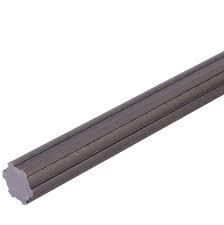
Splined shafts are mechanical components that convey torque and linear motion while preserving rotational integrity. Along their length, they have a series of equally spaced tooth-like grooves called splines. To efficiently transfer motion, these splines interact with similar grooves in mating components such as gears or bushings.
2. Design and Components of Splined Shafts:
Splined shafts have specialized components and features that ensure effective torque transmission and exact linear motion. Let's look at the design and parts of splined shafts:
- Shaft Body:
- The shaft body, which provides structural integrity and support for the entire assembly, is the main component of a splined shaft.
- It has a cylindrical or tubular shape and is built of high-strength materials such as steel or alloy.
- The diameter and length of the shaft body are determined by the application requirements, which include the amount of torque and linear motion.
- Splines:
- Splines are the teeth-like grooves drilled into the shaft body's surface. These grooves interact with other components to impart torque and allow for linear motion.
- Splines can have a variety of profiles and combinations based on the needs of the application. Straight-sided, involute, serrated, and helical splines are examples of common splines.
- The application requirements dictate the number and spacing of the splines, taking into account parameters like load capacity, torque transfer, and precision.
- Spline Engagement:
- Spline contact is critical for the effective operation of the splined shaft.
- The corresponding grooves on the mating component, such as a gear, bushing, or coupling, match the contour and spacing of the splines on the shaft.
- Precision machining of the shaft's splines and the mating component's corresponding grooves assures a close fit and good load distribution for effective torque transmission and linear motion.
- Surface Treatments:
- Surface treatments can improve the performance and durability of splined shafts.
- Heat treatment, such as case hardening, is a common surface treatment used to increase the hardness and wear resistance of splines.
- To increase corrosion resistance and minimize friction, coatings or plating, such as chrome plating or nitriding, can be applied to the shaft body.
- Lubrication:
- Lubrication may be required, depending on the application requirements, to reduce friction and wear between the splined shaft and mating components.
- To ensure smooth operation and limit the danger of damage or early failure, lubricants like oils or greases can be added to the spline engagement region.
Splined shafts' design and components are meticulously engineered to ensure dependable torque transfer, perfect linear motion, and durability in high-precision applications. These parts work together to improve performance, reduce backlash, and accommodate varied loads and operating circumstances.
3. How do splined shafts facilitate linear motion while maintaining rotational integrity?:
Splined shafts are designed to permit linear motion while maintaining rotational integrity, making them adaptable components for applications that require both rotational torque transfer and controlled linear movement. Here's how splined shafts achieve this:
- Tooth Engagement:
- Splined shafts have a set of teeth-like grooves, known as splines, running the length of them.
- The appropriate grooves on the mating component, such as a gear or bushing, engage with the splines on the shaft.
- The engagement of the teeth creates a positive connection between the shaft and the mating component, allowing torque to be delivered from the shaft to the component.
- Torque Transmission:
- When torque is applied to the splined shaft, the engagement of the splines and the mating component prevents the component from rotating.
- Splines distribute torque from the shaft to the mating component, allowing it to rotate in rhythm with the shaft.
- This maintains rotational integrity and guarantees that the desired torque is transmitted without slippage or loss.
- Linear Motion:
- Regardless of the torque gearbox, splined shafts enable regulated linear motion of the mating component along the shaft's axis.
- The slots on the mating component allow movement along the shaft while maintaining rotational integrity.
- The engagement of the splines allows the mating component to translate linearly as the shaft spins.
- In high-precision applications, linear motion can be accurately regulated, enabling accurate placement and smooth movement.
- Load Distribution:
- Splined shafts distribute the weight along the shaft's length by engaging several tooth engagement sites.
- This design characteristic aids in the uniform distribution of pressures applied to the shaft, lowering the likelihood of localized stress concentrations and assuring dependable performance.
- Splined shafts' load distribution capabilities improve their ability to withstand heavier loads while maintaining stability during operation.
Engineers can produce a seamless combination of rotating torque transmission and regulated linear motion by adding splined shafts to mechanical systems. Splined shafts' tooth engagement enables exact linear movement while ensuring torque transmission integrity, making them perfect for applications such as precision machinery, robotics, automotive systems, and aerospace technology.
4. Compatibility and Applications:
There are several varieties of small linear guides on the market, each designed to satisfy unique application needs. Here are several examples:
Versatility of Splined Shafts:
- Splined shafts are extremely adaptable components that can be used in a wide range of machinery and equipment.
- They can be utilized in both rotational and linear motion systems, providing a versatile option for torque transmission and controlled linear movement.
- Splined shafts can be used in a variety of configurations, including shaft-to-shaft, shaft-to-gear or pulley, and shaft-to-bearing connections.
- Their interoperability with many types of mating components enables customization and adaptability to a wide range of mechanical systems.
Specific Industries and Applications:
- Automotive Industry:
- Splined shafts are widely employed in automotive applications that require accurate motion gearbox and control.
- They are used in engine systems, steering systems, braking systems, and suspension systems.
- Splined shafts, for example, allow torque to be transferred from the engine to the gearbox, ensuring efficient and consistent power delivery.
- Aerospace Industry:
- Splined shafts are used in sensitive applications that require great precision and reliability in the aerospace sector.
- They're found in things like aircraft control systems, landing gear mechanics, actuation systems, and engine components.
- Splined shafts ensure smooth and accurate aircraft manoeuvrability by allowing precise control of flaps, ailerons, and other control surfaces.
- Robotics and Automation:
- Splined shafts are important in robotics and automation systems because they provide precise motion control and positioning.
- They're used in things like robotic arms, linear actuators, and motion control systems.
- Splined shafts allow robots to accomplish jobs with greater accuracy, speed, and consistency, making them indispensable in areas such as manufacturing, logistics, and healthcare.
- Precision Machining:
- Splined shafts help achieve high-accuracy and reliable machine motions in precision machining applications.
- CNC machines, milling machines, lathes, and other precision machining equipment use them.
- Splined shafts offer perfect linear motion and cutting tool position control, improving overall machining accuracy and surface smoothness.
- Other Industries:
- Splined shafts are also employed in a wide range of other industries, including heavy machinery, printing equipment, medical devices, and industrial automation.
- They find application in material handling systems, conveyors, pumps, and various motion control systems.
Splined shafts work with a wide range of machinery and equipment, making them ideal for applications requiring accurate motion control, torque transmission, and linear movement. Their adaptability and versatility make them a popular choice in a variety of industries, including automotive, aerospace, robotics, precision machining, and many more.
5. Advantages of using Splined Shafts:
Splined shafts have various advantages in high-precision applications. Let us look at some of the important benefits:
- Reduced Backlash:
- Backlash is the unwanted clearance or play between mating components that causes imprecise motion and placement.
- Because of their toothed interaction with mating components, splined shafts reduce or eliminate backlash.
- Splined shafts' tight fit and accurate tooth engagement ensure low or no movement between the shaft and mating components, resulting in increased precision and repeatability.
- Enhanced Positional Accuracy:
- Splined shafts outperform standard linear motion components in terms of positional precision.
- Splines with fine machining and close interaction with mating components result in accurate and regulated linear motion.
- This precision is critical in applications such as robots, CNC machining, metrology systems, and optical equipment that require accurate positioning.
- Improved Rigidity and Load Capacity:
- Splined shafts are more stiff than standard linear motion components.
- Splined shafts' toothed construction gives enhanced resistance to deflection and bending stresses.
- Because of the increased rigidity, splined shafts can handle higher loads while remaining stable during operation.
- Splined shafts' enhanced load-carrying capacity makes them ideal for applications involving heavy machinery, industrial automation, and material handling systems.
- Enhanced Durability:
- Splined shafts are built for toughness and longevity in harsh conditions.
- Because of their sturdy construction and high-quality materials, they are resistant to wear, fatigue, and deformation.
- The absence of rolling elements, which is common in traditional linear motion components, lowers wear and the need for frequent lubrication.
- Because splined shafts are more durable, they require less maintenance and have a longer service life.
- Application Versatility:
- Splined shafts are useful in a variety of applications other than linear motion.
- They can be integrated into rotational systems, allowing for the transmission of rotating torque as well as the control of linear motion.
- Splined shafts are used in a variety of mechanical systems and can be found in industries such as automotive, aerospace, robotics, precision machining, and more.
Engineers and designers can benefit from reduced backlash, higher positional precision, increased rigidity, increased load capacity, improved longevity, and application variety by using splined shafts. These benefits lead to greater precision, dependability, and performance in high-precision applications.
6. Top Indian and international splined shaft manufacturers:
Indian Manufactureres
- Bharat Forge Ltd.:
- Bharat Forge is an Indian manufacturer of forged and machined components such as splined shafts.
- The company provides services to a variety of industries, including automotive, aerospace, defence, and industrial applications.
- Website: https://www.bharatforge.com/
- GNA Gears Ltd:
- GNA Gears specializes in the manufacture of precision gears, including splined shafts.
- They offer customized solutions for various industries, including automotive, agriculture, and construction equipment.
- Website: https://www.gnagears.com/
- Wipro Infrastructure Engineering:
- Wipro Infrastructure Engineering is a well-known producer of hydraulic cylinders and systems.
- Splined shafts are available as part of their hydraulic cylinder solutions for a variety of applications.
- Website: https://www.wiproinfra.com/.
International Manufacturers
- Maedler GmbH:
- German-based Maedler produces and distributes power transmission parts, notably splined shafts.
- For a variety of industrial applications, they provide a comprehensive selection of splined shafts in various sizes and profiles.
- Maedler focuses on offering their clients dependable, high-quality items.
- Website: https://maedler.de/
- Dana Incorporated:
- Drivetrain and propulsion systems, including splined shafts, are supplied by Dana on a global scale.
- They provide a variety of splined shafts for use in industrial, commercial, off-road, and automotive applications.
- Website: https://www.dana.com
- NTN Corporation:
- Leading producer of precision equipment, automotive parts, and bearings in Japan is NTN.
- They create splined shafts that are employed in a variety of sectors, such as the automotive, robotics, and industrial machinery industries.
- Website: https://www.ntnglobal.com/
- Bosch Rexroth AG:
- A well-known provider of drive and control technologies is Bosch Rexroth.
- Splined shafts and other fine parts are produced by them and used in hydraulic and electric drive systems.
- Website: https://www.boschrexroth.com/
7. Conclusion:
In conclusion, splined shafts provide a variety of uses and advantages in high-precision applications. Their toothed engagement ensures accurate motion control by reducing backlash and improving positioning accuracy. Splined shafts can support heavier loads thanks to their increased stiffness and load capacity. Splined shafts are used in a variety of industries, including the automotive, aerospace, robotics, and precision machining, due to their dependability and adaptability. Splined shafts are supplied for these purposes by both domestic companies like Bharat Forge Ltd. and foreign companies like Dana Incorporated and Maedler GmbH. Engineers may obtain accurate and dependable motion gearbox by using splined shafts, which improves the overall effectiveness and performance of their systems.
Share this article