Blog
Life-Saving Role of ISC Miniature Bearings in Medical Industry
Introduction:
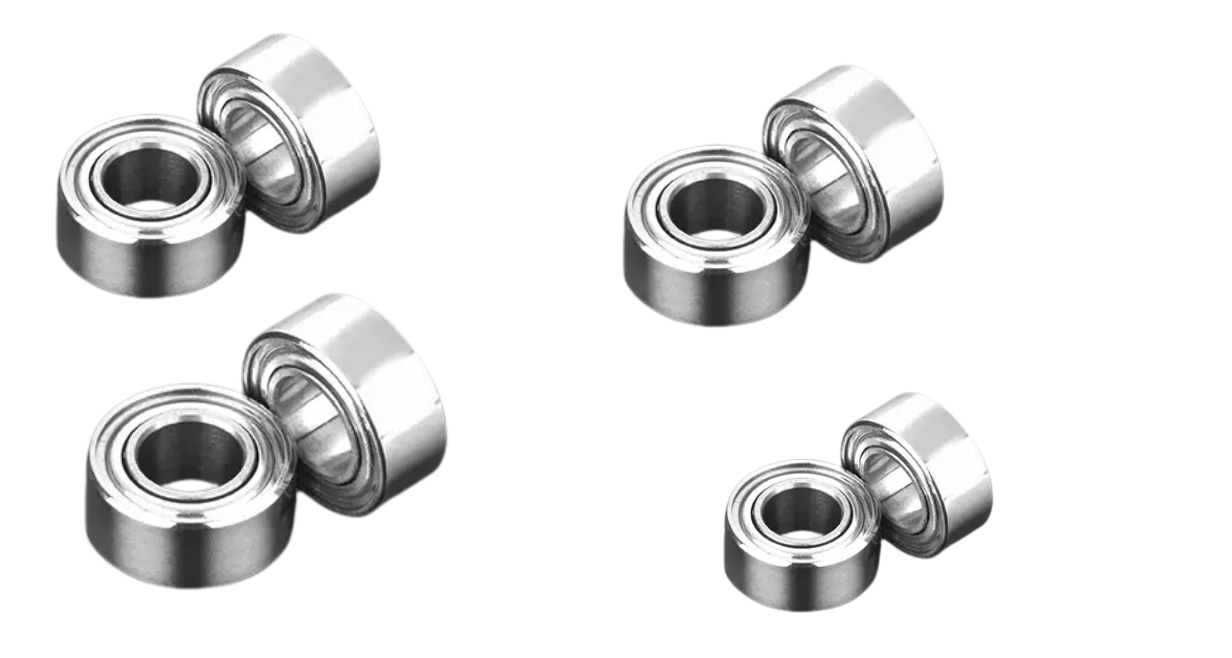
Precision and dependability are not only vital in the fast-paced world of healthcare; they can be a matter of life and death. In this context, it may come as a surprise that a small but essential component - ISC Miniature Bearings - plays a critical role in the smooth operation of numerous medical devices and equipment. These inconspicuous mechanical wonders are the medical industry's unsung heroes, discreetly powering everything from robotic surgical systems to cutting-edge imaging equipment. In this blog post, we will look at the importance of miniature bearings in the medical profession and how they help provide life-saving healthcare services. Let's take a look at the field of precision medicine.
- The Medical Device Landscape
Miniature bearings are the unsung workhorses that assure precision and reliability in medical devices and equipment. Here's a quick rundown of the medical gadgets and equipment that rely on these little but vital components:
Surgical Robots: Surgical robots, which are used in minimally invasive operations, rely largely on small bearings for precise and consistent movement during procedures. These bearings allow surgeons to accomplish complex procedures with pinpoint accuracy.
Imaging Equipment: Sophisticated imaging equipment, such as MRI machines, CT scanners, and X-ray machines, rely on small bearings to ensure the smooth rotation of critical components. This precision is critical for producing clear and comprehensive medical images that may be used to make accurate diagnoses.
Infusion Pumps: Infusion pumps, which are used to give medications and fluids to patients, require small bearings to assure accuracy and constancy of administration. These bearings are critical to patient safety.
Dental Instruments: Dental devices, such as drills and milling machines, require small bearings for precision during dental procedures. Patients benefit from less pain and faster recovery times.
Endoscopy Devices: Endoscopic devices rely on small bearings for flexibility, control, and precise navigation within the body when utilized for minimally invasive diagnostic and surgical operations.
Diagnostic Equipment: To assure the accuracy of test results, several diagnostic machines, such as blood analyzers and genetic sequencers, use small bearings in their moving components.
These are just a few instances of how small bearings silently power the wide range of medical devices and equipment on which healthcare professionals rely every day. Their accuracy and dependability are critical to enhancing patient outcomes and overall healthcare quality.
- Precision & Reliability in Medical Devices
Precision and dependability are critical in the field of medical equipment for the following reasons:
Patient Safety: In medical operations, even minor mistakes can have serious effects. Precision ensures that medical equipment fulfills its job correctly, reducing patient danger.
Treatment Efficacy: Accurate and dependable medical instruments ensure the efficacy of treatments and interventions. Precision is essential for good outcomes, whether it's providing the correct amount of medication or obtaining accurate diagnostic images.
Minimally Invasive Treatments: Many current medical treatments strive to be as minimally invasive as possible in order to reduce patient trauma and recovery times. Medical device precision allows for fewer incisions and more controlled procedures.
Longetivity: Reliability is critical for medical equipment's lifetime. For years, healthcare facilities have relied on these gadgets, and any downtime can interrupt patient care and increase expenditures.
Let's look at how small bearings help these technologies be more precise and functional:
Effortless Movements: Miniature bearings provide for smooth, frictionless movement of components within medical devices. This is critical for surgical robots, imaging devices, and other equipment that requires precise motion control.
Reduced Vibration: Precision bearings reduce vibration, ensuring that sensitive procedures and images stay stable. This is crucial in applications such as MRI equipment, where even minor motions can cause image distortion.
Durability: Miniature bearings are designed to endure high levels of tension and wear. Their dependability implies that medical gadgets can run continuously without needing to be serviced.
Consistency: Precision microbearings ensure that medical devices deliver the necessary outcomes on a consistent basis, whether it's keeping a constant flow rate in infusion pumps or delivering precise diagnostic readings.
In conclusion, precision and dependability are non-negotiables in the medical industry, where patient safety and success are at stake. Miniature bearings are critical in obtaining these vital qualities in medical equipment, allowing healthcare practitioners to give the finest care possible.
- Applications of ISC Miniature Bearings in the Medical Industry
ISC Miniature Bearings are used in a variety of medical applications, contributing to the precision and reliability of key medical instruments. Here are a few significant medical applications using ISC Miniature Bearings:
Robotic-Aided Surgery
- Surgical Robots: ISC Miniature Bearings enable robotic arms to move precisely and controllably in minimally invasive surgical operations. As a result, procedures are less intrusive, more precise, and result in faster patient recovery.
Medical Imaging Devices
- MRI Machines: MRI machines rely on small bearings to ensure the steady rotation of critical components, allowing for the production of detailed and high-resolution images of internal body structures.
- CT Scanners: ISC Miniature Bearings contribute to the precision and stability needed for the quick rotation of X-ray detectors, hence improving CT scan quality.
- X-Ray Machines: Miniature bearings in X-ray machines enable the movement of components that correctly position patients and X-ray sources, minimizing exposure periods and patient discomfort.
Diagnostic Tools
- Blood Analyzer: Miniature bearings are used in the exact movement of sample trays and measuring components in blood analyzers, ensuring accurate and trustworthy diagnostic results.
- Genetic Sequencer: Miniature bearings are employed in genetic sequencing equipment to accurately control the movement of samples and reagents, allowing for effective DNA sequencing.
Pumping and Infusion Systems
- Infusion Pumps: Miniature bearings are crucial in infusion pumps for maintaining exact flow rates of drugs and fluids, ensuring patients receive the correct amounts.
Dental Instruments
- Dental Drills: Miniature bearings in dental applications enable the high-speed and precise movement required for dental drills, improving patient comfort and treatment efficacy.
Endoscopic Instruments
- Endoscopes: Endoscopes use miniature bearings in their articulation and control mechanisms, enabling precise navigation within the body during minimally invasive operations.
These are just a few instances of how ISC Miniature Bearings can help in a variety of medical applications. Their precision and dependability are critical in ensuring the effectiveness of medical treatments and the well-being of patients. ISC's dedication to quality and innovation makes them a reliable choice in the ever evolving field of medical technology.
- Challenges and Stringent Requirements
Medical device makers work in a specialized setting with unique problems and rigorous regulatory requirements:
Patient Safety: Patient safety is the most important priority. A medical device's malfunction or imprecision can cause catastrophic injury. Manufacturers must prioritize safety throughout the design and manufacturing processes.
Regulatory Compliance: To assure the safety and efficacy of medical devices, the medical business is tightly regulated. Manufacturers must conform to international standards such as ISO 13485 and meet the stringent standards set by regulators such as the FDA (Food and Drug Administration).
Quality Control: It is critical to maintain consistent quality and performance. To discover and correct any errors or anomalies, manufacturers must adopt comprehensive quality control methods.
Risk Management: Risk management requires accurate risk assessment. Manufacturers must thoroughly examine and mitigate the risks associated with their products.
Documentation and Traceability: To track the components used in each device, thorough documentation and traceability are required. This is critical in the case of recalls or inquiries.
Given these challenges, the need for bearings that meet these high standards cannot be overstated. Bearings are critical components in the medical business, requiring remarkable precision, dependability, and adherence to tight rules. They must fulfill stringent quality standards, be biocompatible to minimize adverse responses in patients, and provide longevity and durability for longer device lifespans. Failure to satisfy these high expectations can lead to serious errors and jeopardize patient safety. Bearings are thus critical in maintaining the dependability and precision of medical equipment, emphasizing their importance in the healthcare sector.
- Innovation in Miniature Bearings for Medicine
The medical business is constantly pushing the boundaries of technology, and miniature bearings are no exception. Recent advancements in tiny bearing technology have improved their performance and application in medical devices dramatically. Here are several notable developments, particularly in materials, design, and lubrication:
Innovative Materials:
- Ceramic Bearings: Due to their superior strength, lightweight characteristics, and corrosion resistance, ceramic materials such as silicon nitride have gained appeal in Miniature bearings. They are also non-magnetic and have high wear resistance.
- Biocompatible Materials: Miniature bearings made of biocompatible materials are in high demand, particularly in devices that come into direct contact with the human body. Bearings made from materials that exceed high biocompatibility standards are now available from manufacturers, ensuring patient safety.
Design Innovation:
- Integrated Seals: Miniature bearings with integrated seals are more resistant to pollutants and lower the danger of contamination in sterile medical situations.
- Customized Solutions: Manufacturers are providing more customizable solutions to fulfill individual medical device requirements. Tailored designs enable bearings to fit exactly inside the constraints of small medical devices.
Lubrication Innovations:
- Dry Lubrication: Dry lubrication alternatives in micro bearings are becoming more common, eliminating the need for liquid lubricants. This is especially useful in cleanroom environments and applications where liquid lubricants are not viable.
- Enhanced Lubirication: Miniature bearings increasingly integrate innovative lubrication systems, such as micro-reservoirs and self-lubricating coatings, to improve service life and reduce maintenance requirements.
These advancements help to increase the dependability, precision, and durability of tiny bearings in medical applications. They allow medical device producers to create more efficient and safer equipment, which benefits both healthcare professionals and patients. Miniature bearings will become increasingly important in the ever-changing world of medical devices as technology advances.
- Conclusion:
In conclusion, material handling precision is a game changer, and Gambini's Rack and Pinion systems are at the forefront of delivering it. Precision is a prerequisite for firms seeking efficiency, cost savings, and a competitive advantage. Gambini's dedication to precise engineering makes them the ideal partner for achieving these objectives. Investigate the precision advantage with Gambini to propel your material handling operations to new heights of success.
- Reference Links:
- Principle Brand’s Official Website: Products : Bearings | NSK Micro Precision Co., LTD.
- Products: ISC Miniature Bearing - Multidimensions
*Please note that the information provided in this blog is a combination of AI-generated information models, the expertise of human writers, and industry professionals. All efforts have been made to ensure the accuracy and reliability of the information presented here.
Share this article
