Blog

Multidimensions | Posted on Jul 03, 2023 |22 min Read

Optimizing Compact Automation: The Benefits of Miniature Linear Guides.

Optimizing Compact Automation: The Benefits of Miniature Linear Guides.

1. Introduction: 

Miniature linear guides are critical components in compact automation systems, allowing for exact linear motion while also increasing efficiency. The need for compact automation systems has increased as enterprises strive for space optimization and efficient operations. In this blog, we will look at the advantages of using small linear guides, which are essential for maintaining smooth and accurate movement inside these systems.

Definition of Miniature Linear Guides:

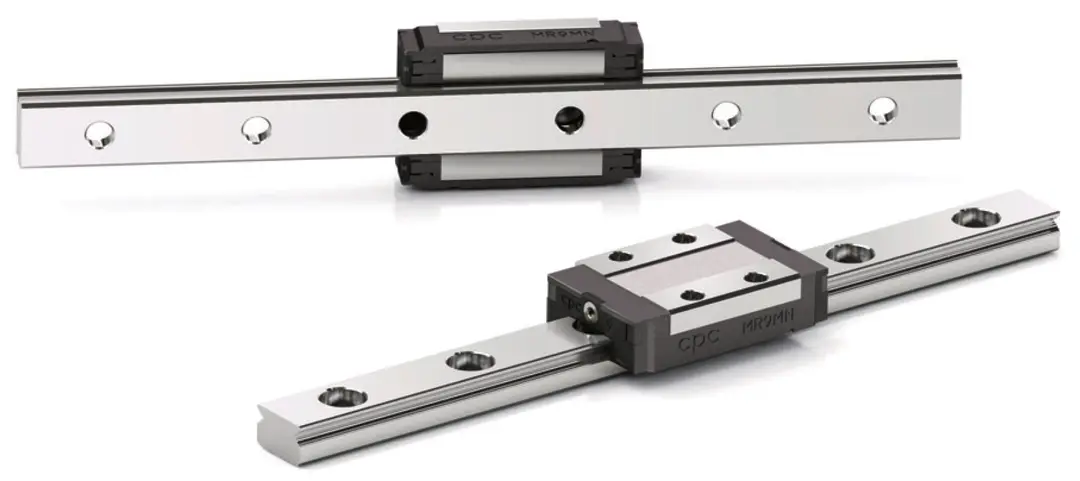
A compact device called a miniature linear guide permits precise linear motion in automation systems. It is a ball bearing or roller rail and carriage system that maximizes space utilization and ensures accuracy in compact applications.

2. Structure & Components of Miniature Linear Guides.

  1. Rail: A rail is an important component of a miniature linear guide. It acts as a guide track for the carriage as it moves. The rail, which is often made of hardened steel or aluminum, offers a precise and sturdy track for linear motion.
  2. Carriage: A small linear guide's moving component is the carriage. It runs beside the rail and is in charge of sustaining and guiding the load. The carriage has wheels, ball bearings, or rollers to provide for smooth movement over the rail.
  3. Rolling Elements: Miniature linear guides use rolling elements, such as ball bearings or rollers, to reduce friction and assure smooth motion. These rolling parts are deliberately placed within the carriage, allowing it to move along the rail smoothly.
  4. Caging System: Miniature linear guides frequently include a caging system to ensure appropriate alignment and spacing of the rolling parts. The caging mechanism holds the rolling pieces in place, preventing them from colliding, decreasing friction, and improving overall performance and longevity.
  5. Sealing Mechanisms: Sealing mechanisms are used in many small linear guides to protect internal components from impurities such as dust, dirt, and moisture. Seals or wipers are installed at the carriage's ends to prevent extraneous particles from entering and inflicting damage or impeding smooth movement.
  6. Lubrication: Lubrication is critical for the smooth operation and lifetime of small linear guides. They require lubrication on a regular basis to reduce friction, wear, and ensure constant operation. Lubrication can be applied via lubrication ports or other approved access points.
  7. Mounting and Fixing Elements: Miniature linear guides are made to be conveniently mounted and fixed within automation systems. They may have mounting holes or slots along the rail and carriage, allowing them to be securely attached to the surrounding building or machinery.

Depending on the manufacturer, design, and intended application, the precise structure and components of miniature linear guides may differ. These key aspects, however, work in tandem to offer smooth, precise, and dependable linear motion inside small automation systems, adding to their overall efficiency and performance.

3. Types of Miniature Linear Guides: 

There are several varieties of small linear guides on the market, each designed to satisfy unique application needs. Here are several examples:

  1. Miniature Linear Guides with Ball Bearings: Miniature linear guides with ball bearings provide for smooth and precise linear motion. They have a low friction coefficient, a large load capacity, and great positional accuracy. These guides are widely employed in applications that need great precision and a small footprint.
  2. Roller tiny Linear Guides: Roller Miniature Linear Guides use rollers instead of ball bearings to control motion. When compared to ball type guides, they can handle larger loads and give more stiffness. Roller guides are frequently used in applications requiring high stiffness and demanding load capacities.
  3. Slide Type Miniature Linear Guides: Slide type miniature linear guides feature a sliding mechanism using sliding elements or surfaces. They offer compact design, simplicity, and cost-effectiveness. Slide guides are suitable for applications where low-friction linear motion is required, and moderate load capacities are involved.
  4. Miniature Linear Guides with Crossed Roller Bearings: Miniature linear guides with crossed roller bearings achieve great stiffness and precision. They can withstand complex loads and have high moments and torsional rigidity. These guides are frequently used in applications requiring precise positioning and stability.
  5. Air Bearing Miniature Linear Guides: Air bearing Miniature linear guides support and guide the carriage with a cushion of compressed air. They provide ultra-smooth and frictionless linear motion, making them ideal for applications that require exceptional precision and vibration-free operation.
  6. Ceramic Miniature Linear Guides: Ceramic miniature linear guides make use of ceramic rolling components or races, which have high hardness, corrosion resistance, and minimal thermal expansion. These guides are frequently used in applications involving high-speed, high-temperature, or corrosive conditions.

Specific miniature linear guide types may be available from different manufacturers and regional markets. The proper kind is determined by the load requirements, precision requirements, environmental conditions, and automation system budget.

4. Working Principle of Miniature Rails:

The interaction between the rail and carriage components is crucial to the operation of miniature linear guides. Here's a brief explanation of how they work:

  1. Rail: The rail acts as a stationary guide, giving a straight path for the carriage to follow. It is normally securely installed within the automation system.
  2. Carriage: The movable component that runs along the rail is the carriage. It is connected to the load or machinery requiring linear motion. 
  3. Rolling Elements: Between the rail and carriage, miniature linear guides employ rolling elements such as ball bearings or rollers. These rolling parts reduce friction and allow for more fluid movement.
  4. Load Distribution: When a force is applied to the carriage, the rolling parts equally distribute the weight along the rail. This enables effective and balanced load-bearing capacities.
  5. Linear Motion: When the rolling parts make contact with the rail, they facilitate linear motion by rolling or sliding over the surface of the rail. This action allows the carriage to go the desired distance in a smooth and exact manner.
  6. Lubrication: For the smooth operation of small linear guides, proper lubrication is required. Lubricants reduce friction between the rolling parts and the rail, resulting in less wear and more constant movement.
  7. Support and Stability: Miniature linear guides offer support and stability to the carriage's load or machinery. They keep the desired position, reduce vibrations, and contribute to the accuracy and dependability of linear motion.

The operation of miniature linear guides guarantees precise and smooth linear motion inside compact automation systems. Miniature linear guides play an important role in improving the efficiency, precision, and overall performance of automation systems by minimizing friction, evenly distributing loads, and providing reliable guiding.

5. Applications of Miniature Linear Guides

Miniature linear guides are used in a wide range of sectors where compact and precise linear motion is required. Here are some popular uses for small linear guides:

  1. Electronics and Semiconductor Manufacturing:  Miniature linear guides are used in automated pick-and-place machines, PCB assembly equipment, semiconductor inspection systems, and precision measurement devices in electronics and semiconductor manufacturing. They allow for exact component positioning, ensuring perfect assembly and quality control.
  2. Medical and Laboratory Equipment: Miniature linear guides can be found in medical technologies such as robotic surgical systems, imaging equipment, and laboratory automation. They enable smooth and precise movement for sample handling, medical instrument positioning, and microscope stages.
  3. Packaging and Material Handling: Material Handling and packing: Miniature linear guides are used in packing machines, automated sorting systems, conveyor systems, and robotic palletizers. They enable precise and dependable package movement, ensuring effective packing, sorting, and material handling processes.
  4. Aerospace and Defense: Miniature linear guides are utilized in aircraft interiors, missile guidance systems, unmanned aerial vehicles (UAVs), and satellite deployment mechanisms in aerospace and defense applications. They allow for accurate movement and control of essential components and payloads.
  5. Industrial Automation: Miniature linear guides are used in a variety of industrial automation applications, such as CNC machines, 3D printers, robotic arms, and automated assembly lines. They ensure that tools, workpieces, and robotic manipulators move and position correctly.
  6. Automotive and Transportation: Miniature linear guides are used in automated automobile assembly lines, robotic welding systems, and precise testing equipment in the automotive sector. They help to ensure that automotive parts move smoothly and precisely during the production process.
  7. Optics and Photonics: Miniature linear guides can be found in optical equipment such as laser cutting machines, scanning systems, and spectrometers. They allow for accurate beam alignment and measurement by precisely placing optical components.

These are only a handful of the many applications for small linear guides. Because of their small size, accurate motion control, and dependability, they are vital components in a wide range of automation systems used in a variety of sectors.

6. Advantages of Using Ball Bearings in Linear Motion Systems. 

  1. Motion Precision and Accuracy: Miniature linear guides provide great degrees of precision and accuracy in linear motion. They ensure exact placement and repeatability by providing smooth and controlled movement. This accuracy is critical in applications requiring tight tolerances and small changes.
  2. Compact Design: Miniature linear guides are specifically intended to be compact, making them appropriate for applications where space is limited. Because of their modest size, they may be integrated into smaller automation systems or equipment.
  3. High Load Capacity: Despite their small size, miniature linear guides can withstand heavy loads. They are designed to provide strong support and stability, allowing big loads to move smoothly while preserving accuracy and reliability.
  4. Low Friction and Smooth Operation: Miniature linear guides are designed to have as little friction as possible while in motion. They frequently include rolling parts, such as ball bearings or rollers, to reduce friction and allow for smooth operation. As a result, energy consumption is lowered, wear is reduced, and service life is extended.
  5. Rigidity and Stability: Miniature linear guides have excellent rigidity and stability, ensuring linear motion integrity even under extreme conditions. Their design and materials resist vibrations, deflections, and torsional forces, preserving positioning precision and system stability.
  6. Quiet operation: The use of rolling elements and precision components in small linear guides reduces noise and vibration while in motion. This is especially relevant in applications where silent operation is required or where noise reduction is a concern.
  7. Simple Installation and Maintenance: Miniature linear guides are designed to be simple to install and maintain. They frequently have standardized mounting options and are easily incorporated into automation systems. Furthermore, routine lubrication and maintenance are simple, guaranteeing constant performance throughout time.
  8. Versatile Application Range: Miniature linear guides have a wide range of applications in a variety of industries and automation systems. Their adaptability allows them to be employed in a wide range of locations and applications, including electronics production, automotive assembly, medical equipment, and more.

Manufacturers and system integrators can obtain increased precision, efficiency, and reliability in their tiny automation systems by exploiting the advantages of miniature linear guides, ultimately leading to higher productivity and performance.

7. Top Indian Manufacturers in the Industry:

India is home to a number of respected manufacturers who produce high-quality miniature linear guides. Here are some of the industry's leading Indian manufacturers:

  1. THK India Pvt. Ltd.: THK India Pvt. Ltd. is a subsidiary of THK Co., Ltd., a world leader in linear motion systems. THK India specializes in making miniature linear guides noted for their dependability and accuracy, thanks to its precision engineering capabilities. Miniature linear guides with ball bearings, roller guides, and slide guides are among their offerings. The smooth operation, high load capacity, and superb positional precision of THK's small linear guides are well known.
  2. Hiwin Technologies Corp. India Pvt. Ltd.: Hiwin Technologies Corp. India Pvt. Ltd. is a subsidiary of Hiwin Technologies Corp., a well-known Taiwanese maker of motion control devices. Hiwin India provides a comprehensive selection of small linear guides for compact automation systems. Ball type guides, roller type guides, and cross roller type guides are among their product offerings. The precision, high load capacity, and smooth motion control of Hiwin's miniature linear guides are well-known.
  3. Schneeberger India Pvt. Ltd.: Schneeberger India is a subsidiary of Schneeberger AG, a Swiss precision linear technology firm. Schneeberger India produces small linear guides, which are widely employed in a variety of sectors. They include ball bearing guides, roller bearing guides, and crossed roller bearing guides. The exceptional stiffness, precision, and extended service life of Schneeberger's small linear guides are well known.
  4. IKO Nippon Thompson Co., Ltd. (India Liaison Office): IKO Nippon Thompson is a Japanese business that specializes in linear motion systems. IKO Nippon Thompson's India Liaison Office offers a variety of small linear guides appropriate for compact automation systems. Miniature linear guides with ball bearings, slide guides, and crossed roller guides are among their offerings. The great precision, smooth operation, and durability of IKO's small linear guides are well known.
  5. Rexroth Bosch Group (India): The Rexroth Bosch Group is a well-known global corporation that specializes in motor and control technologies. Their Indian subsidiary provides a wide range of microlinear guides for a variety of industrial applications. Ball rail systems, roller rail systems, and small slide guides are among the products available. The small linear guides from Rexroth are well-known for their outstanding performance, precision, and dependability.

These leading Indian manufacturers have carved out a solid foothold in the industry by providing a diverse assortment of micro linear guides of remarkable quality and performance. Because of their knowledge, unique designs, and devotion to customer satisfaction, they are trusted partners for enterprises looking for dependable linear motion solutions in small automation systems.

8.Top International Manufacturers in the Industry:

Several well-known manufacturers known for their quality and innovation dominate the global market for micro linear guides. Here are some of the industry's leading multinational manufacturers.

  1. SKF Group (Sweden): The SKF Group, headquartered in Sweden, is a global leader in the production of bearings, seals, and linear motion systems. With a significant industrial presence, SKF offers a diverse range of small linear guides noted for their precision, dependability, and smooth operation. Ball guides, roller guides, and small profile rail guides are among their product offerings. Because of their outstanding performance and longevity, SKF's small linear guides are trusted by industries all over the world.
  2. NSK Ltd. (Japan): NSK Ltd. is a well-known Japanese manufacturer of bearings and linear motion systems. They specialise in the manufacture of high-quality micro linear guides, which are widely utilised in a variety of sectors. NSK's miniature linear guides are well-known for their small size, high load capacity, and outstanding precision. Ball guides, roller guides, and linear slides are among their products. NSK has a strong global presence and is known for its sophisticated technology and dependable linear motion solutions.
  3. Thomson Industries Inc. (United States): Thomson Industries Inc. is a prominent provider of linear motion control solutions based in the United States. They provide a broad selection of micro linear guides that are known for their precision and smooth action. Thomson's small linear guides use superior ball bearing technology and come in a variety of forms such as profile rails, ball guides, and linear slides. Their products are well-known for their dependability and are widely employed in a variety of industries around the world.
  4. MISUMI Group Inc. (Japan): MISUMI Group Inc. is a well-known Japanese supplier of configurable components and automation systems. They provide a diverse selection of small linear guides that are noted for their adaptability and customization choices. MISUMI's small linear guides come in a variety of sizes and materials, including ball guides, roller guides, and slide guides. MISUMI is a favoured alternative for different sectors demanding small linear motion solutions due to their global presence and reputation for high-quality products.
  5. HepcoMotion (United Kingdom): HepcoMotion is a British company that specializes in the design and manufacture of linear motion systems. They provide a broad selection of miniature linear guides appropriate for small-scale automation systems. The precision, load-carrying capability, and longevity of HepcoMotion's small linear guides are well-known. Linear slides, ball guides, and track systems are among their offerings. HepcoMotion has a significant international presence and is known for its creative solutions and dependable linear motion components.

These leading multinational manufacturers have established themselves as industry leaders by offering high-quality miniature linear guides that fulfill the diversified needs of global markets. Their dedication to innovation, comprehensive product choices, and great customer service make them valued partners for industries all over the world looking for efficient and dependable linear motion solutions.

9. Conclusion: Finally, miniature linear guides play an important role in compact automation systems, providing several major benefits. They maximize space utilization, provide exact and accurate linear motion, ensure smooth and silent operation, provide durability and endurance, and are simple to install and maintain. These benefits boost the overall efficiency and productivity of automation systems in a variety of industries. Businesses have access to high-quality solutions that match their specific demands thanks to prominent manufacturers, both Indian and international, specializing in micro linear guides. Industries can achieve optimal performance, increase product quality, and maximize the efficient use of available space by introducing miniature linear guides into their automation systems.

Latest blogs to read