Blog
Portescap brush DC motors - A revolutionary product in the robotics and automation industries
1. Introduction:
Robotics and automation are becoming increasingly significant in a variety of industries, as they improve efficiency and output. Motors play an important role in powering and controlling these systems, with several motor types being used. Brush DC motors have grown in popularity due to their ease of use, low cost, and adaptability in converting electrical energy into mechanical motion, thus making them an increasingly viable option in robotics and automation applications.
2. Understanding Brush DC Motors:
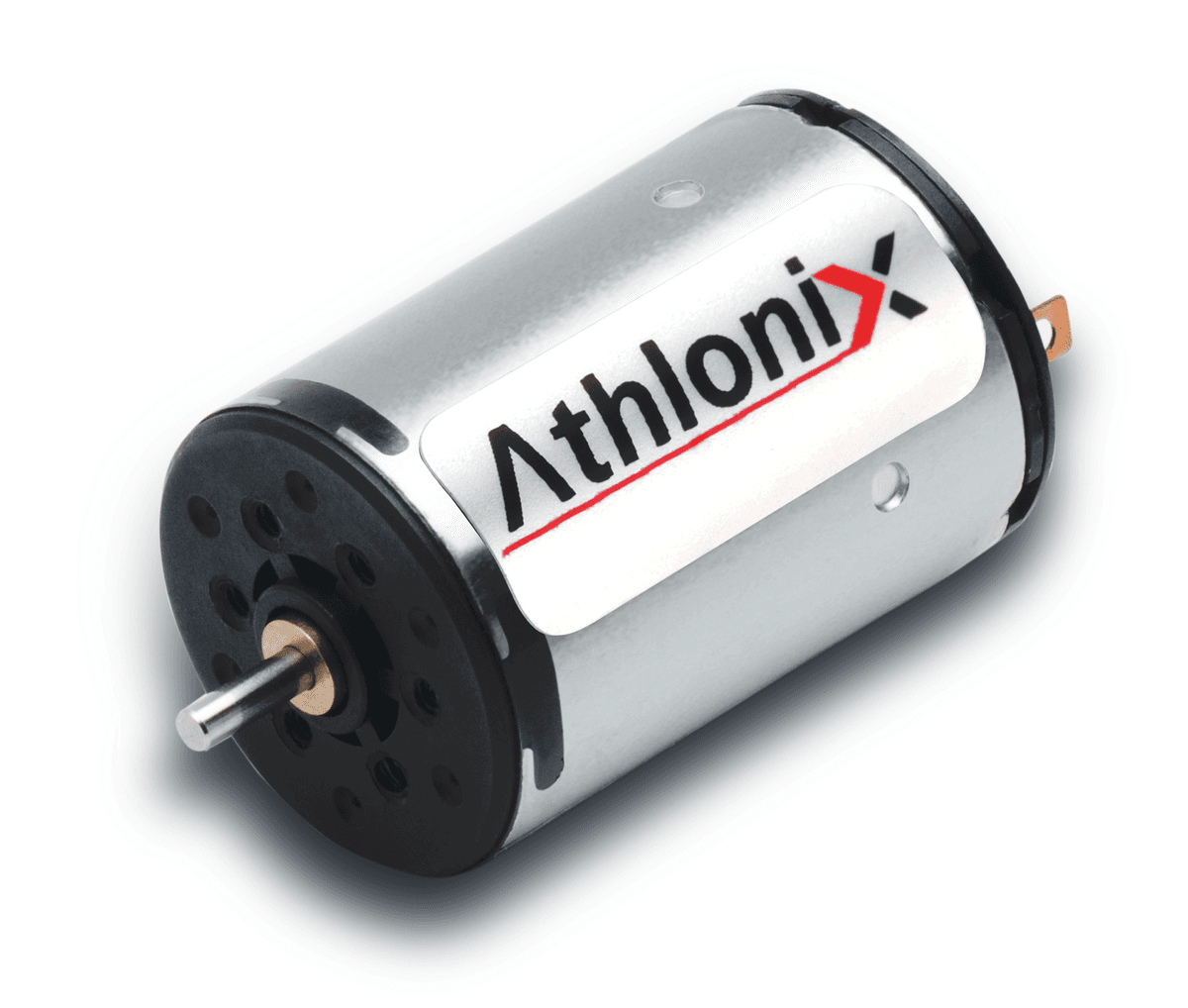
Brush DC motors are widely employed in a variety of applications because of their distinct properties and major contributions to robotics and automation. These motors work by transforming electrical energy into mechanical motion using a commutator and brushes. Their simplicity in design enables simple control and operation. Brush DC motors are inexpensive, making them suitable for a wide range of industries and applications. They have a high starting torque and fine speed and position control, making them excellent for applications requiring precise motion control.
Definition:
An electromechanical motor that turns electrical energy into mechanical motion by interacting with a revolving armature (rotor) and a stationary magnetic field is called a brushless DC motor.
Components, construction and working of brush DC motors:
Brush direct current motors are built with a number of important components that work together to transform electrical energy into mechanical motion. The following are the major components and their functions:
- Rotor: The rotor is the motor's rotating component. It usually has a central shaft and a cylindrical core. When current travels through the wire windings in the core, they form a magnetic field.
- Commutator: The commutator is a segmented metal ring that is installed on the rotor shaft. It is in charge of reversing the direction of current flow in the rotor windings at scheduled intervals to ensure continued spinning. The commutator keeps the brushes in electrical contact.
- Brushes: Brushes are usually made of carbon or graphite and are mounted on fixed structures called brush holders. They make physical contact with the commutator segments and supply electrical current to the rotor windings as they rotate. The brushes also help transfer heat generated during operation.
- Stator: The stator is the stationary part of the motor. It consists of a magnetic field-producing component, typically permanent magnets or electromagnets. The stator's magnetic field interacts with the rotor's magnetic field, creating the torque necessary for rotation.
- Housing: The motor housing encloses and protects the internal components. It is usually made of metal or plastic and provides structural support and heat dissipation for efficient motor operation.
- Bearings: Bearings support the rotor shaft, enabling it to rotate effortlessly and with minimal friction. They are usually ball or sleeve bearings that are found at both ends of the motor.
- Terminals and Wiring: Brush DC motors have terminals for attaching to external power sources. Wiring connects the terminals to the windings and brushes, allowing current to circulate through the motor.
In a brush DC motor, these components work together to turn electrical energy into rotational mechanical motion. When current runs through the windings, a magnetic field is formed that interacts with the magnetic field of the stator. This reaction produces torque, which causes the rotor to rotate. The commutator and brushes ensure that the current flows continuously and that it is reversed, allowing for seamless and uninterrupted spinning.

Advantages and limitations of brush DC motors:
Advantages of Brush DC Motors:
- Simplicity: Brush DC motors feature a simple design with less hardware, making them easier to understand, maintain, and repair. This simplicity assists with their dependability and cost-effectiveness.
- Cost-Efficient: Brush DC motors are often less expensive than other motor types, making them an economical choice for a variety of applications.
- High Starting Torque: Brush DC motors provide a strong starting torque, allowing them to carry heavy loads and provide speedy acceleration in applications that require high torque at the beginning.
- Speed Control: Brush DC motors provide accurate speed control via voltage modifications or the use of additional speed control devices. As a result, they are appropriate for applications that require varying speeds.
- Compact Size: Brush DC motors have a small size and a high power-to-weight ratio, making them ideal for applications with limited space or weight.
- Versatility: Brush direct current motors are adaptable and can be employed in a variety of applications such as robotics, automation, medical devices, and automotive systems.
Limitations of Brush DC Motors:
- Brush and Commutator Wear: Due to physical contact and friction, the brushes and commutators in brush DC motors wear over time. This could demand brush replacement and periodic maintenance.
- Lifespan: Brush DC motors have a lower lifespan than brushless DC motors and other motor types due to brush and commutator wear.
- Electromagnetic Interference (EMI): Brush DC motors can emit electromagnetic interference during operation, which can disrupt sensitive electronic equipment or systems in close vicinity.
- Reduced Efficiency at High Speeds: Due to factors such as brush and commutator resistance, brush DC motors tend to have inferior efficiency at higher speeds. As a result, power consumption and heat generation may increase.
- Limited Speed Range: Brush DC motors often have a limited speed range when compared to other motor types. They might not be suited for applications that require exceptionally fast speeds.
Despite these restrictions, brush DC motors are nevertheless frequently employed in a variety of applications due to their low cost, ease of use, and ability to produce high starting torque and fine speed control in a variety of industrial and automation contexts.
3. Applications of Brush DC Motors:
Brush DC motors are used in a variety of industries and sectors due to their distinct qualities and versatility. Brush DC motors are commonly used in the following applications:
- Robotics: Brush DC motors are commonly employed in robotics for operations such as robot arm movement, joint actuation, gripper control, and locomotion. Because of their high torque and fine speed control, they are well-suited for robotic applications requiring precise and controlled motion.
- Automation and Industrial Machinery: Brush DC motors are used in automation systems and industrial machinery for conveyor belt operation, material handling, packaging, assembly line processes, and other applications. They offer the power and control required for these applications.
- Automotive Systems: Brush DC motors are employed in a variety of automotive applications, including power windows, windscreen wipers, HVAC blowers, seat adjustment mechanisms, and fuel pump systems. Their small size, low cost, and incredible torque make them ideal for these automotive systems.
- Medical Equipment: Brush DC motors are used in a variety of medical devices and equipment, such as surgical robots, infusion pumps, prosthetics, dentistry tools, and laboratory equipment. Their fine control and small size make them useful in medical applications demanding precision movement and control.
- Aerospace and Aviation: Brush DC motors are utilized in aerospace and aviation applications such as flap control, landing gear movement, wing and tail actuation, and ventilation systems. Their dependability and capacity to withstand high loads qualify them for these crucial applications.
- Consumer Electronics: Brush DC motors can be found in consumer electronics goods such as electric toothbrushes, cameras, home appliances, and toys. They provide the rotational motion required for operations like vibration, motorized zoom, and mechanical control.
- Renewable Energy Systems: Brush direct current motors are used in renewable energy systems such as wind turbines and solar tracking systems. They help to optimize energy capture by altering the position of turbine blades or solar panels.
These are just a handful of the many applications for brush DC motors. Because of their simplicity, low cost, and ability to offer high torque and precise control, they are appropriate for a wide range of industries and applications that require reliable and efficient motor operation.
4. Portescap: A Leader in Brush DC Motors
Portescap is a well-known manufacturer of brush DC motors, known for producing high-quality and reliable products. Portescap produces motors that comply with the stringent standards of many industries, thanks to its significant expertise and solid reputation. Their motors are well-known for their high performance, longevity, and precision, making them perfect for demanding applications. Portescap's dedication to quality can be seen in its stringent manufacturing methods and extensive testing, which ensure optimal performance and dependability. Customers can rely on Portescap for motors that continuously function well in tough instances.
Portescap brush DC motors outperform competitors due to their strong torque capability, precise speed control, compact size, and energy-saving characteristics. These motors are built to withstand enormous loads, provide precise motion, and maximize space utilization. They combine improved efficiency and energy-saving technologies, making them appropriate for a wide range of applications in robotics, automation, and medical devices, among others. To fulfill the rigorous needs of current applications, Portescap motors provide great performance, dependability, and efficiency.
Customization options and engineering support
Portescap provides customers with a variety of brush DC motor customization choices and engineering support, ensuring that the motors are suited to specific application requirements. The following are the main points:
- Customization Possibilities:
- Customization is possible for motor size, voltage, speed, torque, and mounting options.
- Shaft options, encoders, and feedback systems can all be customised to meet the needs of the application.
- Allows for agility and flexibility in system integration.
- Tailored Motor Solutions:
- Portescap works closely with customers to understand their specific requirements and challenges.
- Throughout the design phase, experienced engineers collaborate with consumers.
- Ensures that the motor solution is precisely matched to the performance, size restrictions, and environmental conditions of the application.
- Engineering Assistance:
- Comprehensive assistance is provided at all stages of the motor integration process.
- Assistance with design was offered to optimise motor performance and ensure seamless integration.
- For analysing and testing motor solutions, prototyping services are offered.
- Thorough testing and validation to ensure that performance standards are met.
- Motor Optimization Expertise:
- The technical team at Portescap has extensive knowledge and expertise in motor optimization.
- Engineers understand the complexities of motor design as well as the unique requirements of many sectors.
- Improves the performance, efficiency, and dependability of brush DC motors.
Working with Portescap to develop customized brush DC motor solutions adds substantial value. Customers receive motor solutions that are exactly adapted to their application needs because of their extensive customization possibilities, tight collaboration, and thorough engineering support. The expertise of Portescap in motor optimization improves total system performance, making them a reliable alternative for high-performance brush DC motors in robotics and automation applications.
5. Advancements and Innovations in Portescap Brush DC Motors
In recent years, Portescap brush DC motors have experienced significant developments and breakthroughs, making them perfect for robotics and automation applications. Here are the main aspects:
- High torque density and efficiency: Portescap motors produce great torque density and efficiency, delivering efficient and powerful operation in compact dimensions. This enables them to handle difficult applications requiring strong force. Additionally, the motors provide higher efficiency through optimized designs, decreased internal losses, and improved thermal management, resulting in energy savings and overall system efficiency.
- Enhanced durability and reliability: Portescap is committed to improving the longevity and reliability of its motors. To ensure durability, they use modern materials and construction procedures. The motors have improved insulation systems to endure hard operating conditions, high-quality bearings for life, and dust and moisture protection measures. These developments cut maintenance requirements while increasing uptime in difficult situations.
- Integration with advanced control systems: Portescap brush DC motors interact smoothly with advanced control systems. They can be integrated with complex motor control algorithms and feedback systems and are compatible with various control protocols. This enables exact speed control, precise motion control, and synchronization with other system components. The integration with modern control systems improves the performance and adaptability of the motors to a wide range of applications.
6. Conclusion:
In conclusion, Portescap brush DC motors provide excellent torque density, efficiency, increased durability, and dependability. They can work in tandem with modern control systems to provide precise and accurate motion control. These developments and innovations strengthen Portescap's position as a reliable supplier of high-performance brush DC motors for robotics and automation applications.
Share this article