Blog
Understanding the basics of ball bearings and their application in linear motion systems
1. Introduction:
Ball bearings are essential in many mechanical systems, notably in improving linear motion. These clever gadgets are intended to decrease friction between moving elements, allowing for smooth and efficient movement along a straight path. We can grasp the importance of ball bearings in industries such as manufacturing, automotive, and aerospace by understanding the fundamentals of ball bearings and their applications in linear motion systems.
Definition of Ball Bearings:
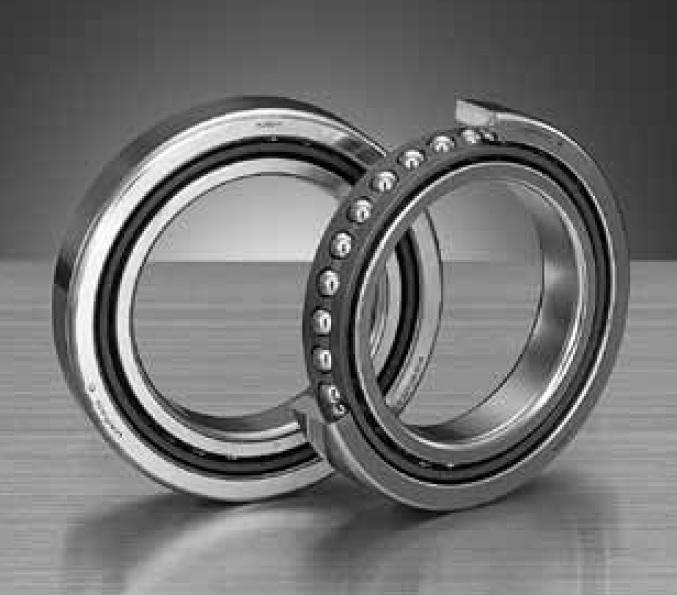
Ball bearings are precision-engineered components that include an outer ring, an inner ring, balls, and a cage or separator. They are specifically intended to promote rotational or linear motion by reducing friction between moving elements. The rolling contact between the balls and the raceways of the rings is the fundamental basis of ball bearings, allowing for smooth and low-resistance movement.
2. The Basics Of Ball Bearings.
Structure of Ball bearings
Ball bearings are made up of several critical components that work together to allow for smooth movement and prevent friction. Understanding these components is critical to understanding how ball bearings work.
Components of Ball Bearings
- Outer Ring: The outer ring, also known as the outer race, is the bearing's stationary component. It supports and stabilizes the entire assembly. The outer ring is usually made of strong materials like steel or stainless steel. It has a racetrack on its inner surface, which is a groove or track. The racecourse directs the movement of the balls.
- Inner Ring: The inner ring, also known as the inner race, is the spinning portion of the bearing. It is intended to fit tightly on a shaft or spindle. The inner ring, like the outer ring, is built of strong materials and has a raceway on its outer surface. The raceway works in tandem with the outer ring's raceway to provide smooth movement.
- Balls: The principal load-carrying elements of a ball bearing are the balls, which are typically constructed of steel or ceramic. They minimize friction by rolling between the raceways of the inner and outer rings. Depending on the bearing design and use, the number and size of the balls can vary. The ball's form and precision are crucial for smooth operation and load distribution.
- Cage or Separator: The cage, also known as the separator or retainer, holds the balls in place and ensures that they are evenly spaced. It keeps the balls from rubbing against each other and ensures a smooth rolling motion. Plastic, brass, or steel are common materials used to construct the cage. It also serves as a separator, distributing the lubricating grease evenly throughout the bearing, improving its performance and longevity.
These components work together to make a strong and efficient ball bearing assembly. The outer and inner rings support the ball, the balls allow for smooth rolling action, and the cage guarantees optimum ball spacing and lubricant distribution.
3. Types of Ball Bearings:
- Deep Groove Ball Bearings: The most popular form of ball bearing is the deep groove ball bearing. They are adaptable and can be used in a variety of applications. These bearings have a deep, continuous raceway groove on both the inner and outer rings, allowing them to withstand radial and moderate axial loads in both directions. Deep groove ball bearings are noted for their minimal friction and quiet operation and can run at high speeds. They are often found in electric motors, household appliances, pumps, and automotive components.
- Angular Contact Ball Bearings: These bearings are intended to handle both radial and axial loads. They have raceways on both the inner and outer rings, but the racetrack on one ring is inclined at an angle to the bearing's axis (usually 15°, 25°, 30°, or 40°). Because of the angular contact, the bearings can withstand higher axial loads in one direction. Angular contact ball bearings are frequently used in pairs or sets to increase axial load carrying capacity and rigidity. They are used in machine tools, automobile wheels, pumps, and gearboxes.
- Thrust Ball Bearings: Thrust ball bearings are specifically developed to handle axial stresses and give high axial stiffness. A shaft washer, a housing washer, and a ball-and-cage assembly are included. A thrust ball bearing's balls are positioned between the shaft and housing washers, allowing it to accommodate axial loads in only one direction. These bearings are not designed to withstand radial loads. Thrust ball bearings are commonly employed in applications requiring axial load support, such as vehicle transmissions, steering systems, and machine tool spindles.
Each type of ball bearing has distinct properties and is intended for use in various load conditions and applications. To guarantee best performance and endurance, it is critical to select the suitable type of bearing depending on parameters such as load capacity, speed, load direction, and space limits. Manufacturers provide thorough specs and advice to assist consumers in choosing the appropriate type of ball bearing for their unique needs.
4. Working Principle of Ball Bearings:
- Friction Reduction: One of the main functions of ball bearings is to reduce friction between moving parts. Friction is an opposing force that can cause wear and energy loss in mechanical systems. Ball bearings reduce friction by substituting rolling friction for sliding friction. The balls' spherical shape allows them to move smoothly between the raceways of the inner and outer rings, substantially minimizing the frictional forces that would occur if the mating surfaces made direct contact. Ball bearings enable the efficient and energy-saving functioning of linear motion systems by minimizing friction.
- Load Distribution: During operation, linear motion systems frequently encounter variable loads and forces. Ball bearings are critical in evenly spreading these stresses over their contact surfaces. The applied loads are distributed radially and axially as the balls roll between the raceways. This load distribution capability reduces the danger of early wear or failure by preventing excessive stress on specific components. Ball bearings improve the overall stability, lifespan, and dependability of linear motion systems by distributing loads.
- Effortless Linear Motion: Ball bearings are specially engineered to provide for smooth linear motion in systems. Ball bearings' low friction properties, combined with their rolling contact, allow for precise and steady movement in a straight line. As the balls travel between the raceways, frictional resistance is reduced, allowing for smoother, more effortless motion. This smooth linear motion is critical for applications requiring precise positioning, control, and minimal deviations from the intended direction. Ball bearings improve the overall performance, precision, and repeatability of linear motion systems by providing smooth linear motion.
In summary, ball bearings in linear motion systems reduce friction through rolling contact, distribute loads evenly across contact surfaces, and enable smooth and precise linear motion. Ball bearings improve the efficiency, wear, and overall performance of linear motion systems by effectively minimizing friction and evenly dispersing loads.
5. Applications of Ball Bearings in linear motions systems
- Industrial Machinery
- Conveyor Systems: Ball bearings are critical in ensuring the smooth and effective functioning of material handling conveyor systems. They are often used in conveyor belt rollers and pulleys to reduce friction and allow the conveyor belt to move smoothly. This improves the productivity and energy efficiency of industrial machinery by allowing for more efficient commodity transport.
- Linear Actuators: Linear actuators are used to convert rotary motion into linear motion in a variety of sectors, including robotics and packaging. Ball bearings are essential components of linear actuators because they allow for precise and smooth linear movement. Ball bearings ensure accurate positioning, consistent motion control, and repeatability by decreasing friction and providing stability, particularly in applications requiring precise linear displacement.
- Robotics: Ball bearings are essential in robotics for achieving precise movement and smooth articulation of robotic arms and joints. They are used in rotary joints, gears, and actuators to facilitate smooth rotation and movement. By minimizing friction and providing high precision, ball bearings contribute to the performance and flexibility of robots, enabling accurate and agile motion with reduced power consumption.
Ball bearings are widely used in industrial machinery to improve linear motion systems. In conveyor systems, linear actuators, and robotics, they optimize efficiency, precision, and dependability. Ball bearings play an important role in increasing the operation of industrial machinery by minimizing friction and enabling smooth and precise linear motion.
- Automotive Sector
Ball bearings are widely used in the automotive industry, particularly in suspension, steering, and gearbox systems.
- Suspension Systems: Ball bearings are required for smooth operation and stability in car suspension systems. They are used in suspension components such as shock absorbers and struts to absorb shocks and vibrations while maintaining control. Ball bearings provide a comfortable and controlled ride by decreasing friction and allowing for accurate motion.
- Steering Systems: Ball bearings are required for smooth operation and stability in car suspension systems. They are used in suspension components such as shock absorbers and struts to absorb shocks and vibrations while maintaining control. Ball bearings provide a comfortable and controlled ride by decreasing friction and allowing for accurate motion.
- Transmission Systems: Ball bearings are frequently used in automotive transmission systems, such as manual and automatic transmissions, as well as differentials. They provide support for rotating shafts and gears, allowing for smooth and efficient power transfer. Ball bearings improve gearbox efficiency, reduce energy loss, and contribute to reliable and quiet operation by minimizing friction and enabling uninterrupted gear movement.
Ball bearings are important in the automobile sector because they improve vehicle performance, safety, and reliability. They improve ride quality, allow for more accurate steering control, and increase power transmission efficiency. Ball bearings contribute considerably to the overall functionality and driving experience of automobiles by reducing friction and facilitating smooth motion.
- Aerospace Industry
In the aerospace industry, ball bearings are crucial for various applications, including flight control systems, landing gear mechanisms, and sliding doors and panels.
- Flight Control Systems: Ball bearings are essential in aerospace flight control systems, which are responsible for maneuvering and directing the aircraft during flight. They enable smooth and precise movement on control surfaces such as ailerons, elevators, and rudders. Ball bearings aid in the transfer of control inputs, ensuring accurate and responsive aircraft control. They improve the safety and maneuverability of aeronautical vehicles by reducing friction and enabling dependable motion.
- Landing Gear Mechanism: Ball bearings are critical components of aerospace landing gear mechanics that sustain the aircraft during takeoff, landing, and ground operations. They are used in the landing gear's wheels, axles, and pivot points to provide for smooth rotation and articulation. The use of ball bearings allows the landing gear to handle heavy loads, absorb shocks, and maintain steady ground contact. They contribute to the aircraft's overall structural integrity, safe landings, and dependable ground handling.
- Sliding Doors and Panels: Ball bearings are used in sliding doors and panels in aerospace applications, which are critical for accessing compartments, cargo areas, and equipment bays. They provide for smooth and fluid sliding motion, ensuring that these access points operate easily and reliably. Ball bearings reduce friction and allow for accurate alignment, making it easier to open and close doors and panels. They improve the functionality and accessibility of aeronautical vehicles, ensuring safe operation and compartment sealing.
Ball bearings are essential in the aerospace industry, particularly in flight control systems, landing gear mechanisms, and sliding doors and panels. They optimize control, enhance safety, and ensure smooth operation in critical aerospace applications. By minimizing friction and enabling precise motion, ball bearings significantly contribute to the overall performance and functionality of aerospace vehicles.
6. Advantages of using Ball Bearings in Linear Motion Systems
Ball bearings provide significant advantages in a variety of applications, including:
- Reduced Friction: Ball bearings reduce friction between moving parts, allowing for smoother operation and less energy loss. This results in increased efficiency and less wear and tear on the components.
- High Load Capacity: Ball bearings are designed to withstand large radial and axial loads. They distribute applied stresses evenly, reducing undue stress on individual components and improving overall system strength and durability.
- Precise Motion Control: Because of their low friction and rolling contact, ball bearings provide precise and accurate motion control. This is especially useful in applications requiring precise positioning, smooth linear or rotational motion, and low deviations.
- Low Noise and Vibration: The rolling action of ball bearings produces less noise and vibration compared to other bearing types. This is beneficial in applications where noise reduction and smooth operation are critical, such as in automotive or aerospace systems.
- Long Service Life: Ball bearings are designed to withstand high loads and provide long service life. With proper lubrication and maintenance, they can operate reliably for extended periods without the need for frequent replacement.
- Wide Range of Sizes and Configurations: Ball bearings are available in a wide range of sizes, configurations, and materials to suit different application requirements. This versatility allows for customization and adaptability in various industries and machinery.
Ball bearings provide various benefits, including low friction, high load capacity, precise motion control, minimal noise and vibration, extended service life, and versatility in a variety of applications. Because of these advantages, they are commonly used in industries such as automotive, aerospace, industrial machinery, and robotics.
7. Prominent Ball Bearing Manufacturers in Indian Market
- ABC Bearings Limited: ABC Bearings Limited is a renowned ball bearing producer in India. The company manufactures tapered roller bearings, cylindrical roller bearings, and spherical roller bearings. They have a diverse product line that caters to industries such as automotive, agriculture, and industrial equipment. ABC Bearings Limited has received several certifications, including ISO/TS 16949:2009 and ISO 14001:2004, demonstrating their dedication to quality and environmental management.
- National Engineering Industries Limited (NEI): National Engineering Industries Limited (NEI) is a major player in the Indian ball bearing business. NEI has established itself as a dependable producer over the course of six decades. They provide a wide range of ball bearings for a variety of applications, including automotive, industrial, and agricultural. NEI has a solid market reputation for producing high-quality products and has received positive comments from customers.
- SKF India Limited: SKF India Limited is a part of the SKF Group, a well-known global manufacturer of ball bearings and other industrial products. SKF, which has a significant presence in India, offers a wide selection of ball bearings built exclusively for linear motion systems. They offer solutions for precise positioning, smooth motion control, and increased dependability. SKF is well-known for its dedication to quality and customer service, delivering optimal performance and client satisfaction.
- NRB Bearings Limited: NRB Bearings Limited is a renowned ball bearing manufacturer in India, specializing in solutions for linear motion applications. They provide a variety of linear motion bearings, including ball bushings and shafts, linear guides, and ball screws. NRB Bearings Limited is well-known for its technological advancements and cooperation with industry partners to provide cutting-edge goods. They serve a wide range of industries, including automotive, railroad, and industrial automation.
Aside from these Indian firms, some important foreign ball bearing manufacturers are:
- NSK: NSK is a global ball bearing industry leader known for its innovative products and cutting-edge technologies. They provide a diverse range of ball bearings for a variety of applications, such as automotive, industrial machinery, and precision equipment.
- NTN Corporation: NTN Corporation is a Japanese ball bearing manufacturer noted for its high-quality products and wide product range. They serve a variety of industries, such as automotive, industrial equipment, and aerospace.
- Timken Company: The Timken Company is a well-known American manufacturer of ball bearings with a diverse product portfolio. They are well-known in the automotive, aerospace, and heavy equipment industries for their strong emphasis on quality and customer satisfaction.
These Indian and worldwide manufacturers play an important role in the ball bearing market, producing high-quality goods and pushing industry innovation.
Conclusion: In conclusion, ball bearings are vital for efficient and reliable linear motion systems. They reduce friction, distribute loads, and enable smooth motion, enhancing the performance and longevity of machinery. Top Indian manufacturers like ABC Bearings, NEI, SKF India, and NRB Bearings offer a diverse range of high-quality ball bearings. International manufacturers like NSK, NTN Corporation, and Timken Company also contribute to the global market with their expertise and innovation. The continuous advancements in ball bearing technology drive progress and meet the evolving needs of various industries, emphasizing their significance in improving performance, safety, and reliability worldwide.
Share this article